Common ("Indian") Myna (Introduced)
Acridotheres tristis
Family: Sturnidae (Starlings and allies, 3 species in Australia)
Size: 23-25 cm
Distribution: Within about 100-200 km of the coasts of eastern Australia and VIC, around areas settled by people.
Status: Locally Abundant to Common
Habitat: Urban
References: Simpson and Day, Reader's Digest, Common Indian Myna Web Site
The Common Myna (usually called the Indian Myna) is a well known introduced bird of urban and settled areas. Some peope say it is regarded as Australia's number one feral enemy (which is a large claim considering the damage done by some of the other main feral species like the red fox and the cane toad). The indian myna takes over nesting hollows that would otherwise be used by native birds and small mammals, and they prey on nests of other birds. They are often seen around garbage bins and garbage in general.
Although it is easily the most hated bird in Australia and many other countries, in India, where they come from originally (and where they belong), people like them. In India the Common Indian Myna is called the “Farmer’s Friend” because it eats insects that destroy crop plants. The name myna comes from a Hindi word, “maina” meaning a bird of the starling family, Sturnidae, to which mynas belong. Mynas in India are also regarded as symbols of undying love, because they often pair for life and maina is also sometimes used as a term of endearment for young girls.
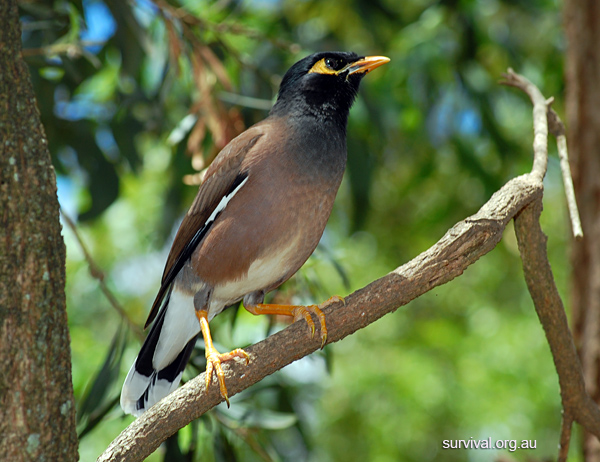
Photo: Lake Parramatta, NSW. High Resolution (2413 x 1858).
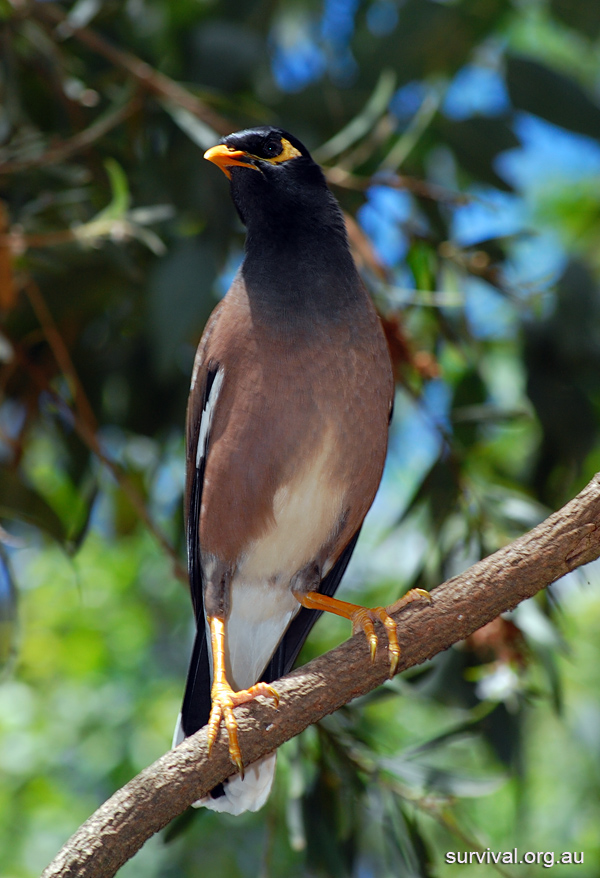
Photo: Lake Parramatta, NSW. High Resolution (1636 x 2394).
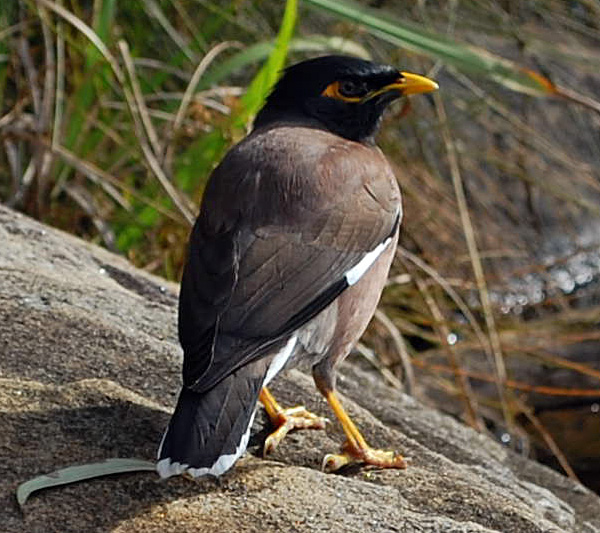
Photo: Lake Parramatta, NSW.
Some Birdwatching Resources
|
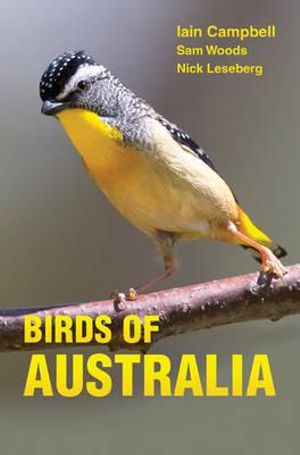 NEW: Birds of Australia: A Photographic Guide, by Iain Campbell, Sam Woods, Nick Leseberg, Geoff Jones (Photographer).
 I bought this field guide recently (June 2020). As the name suggests, it's got photographs rather than line drawings. They are very high quality, clear photos. I've got so many field guides now, they have to be really good before I buy them (I got it from a physical book shop, so I was able to look through it thoroughly before deciding whether or not to get it).
From the publisher:
Australia is home to a spectacular diversity of birdlife, from parrots and penguins to emus and vibrant passerines. Birds of Australia covers all 714 species of resident birds and regularly occurring migrants and features more than 1,100 stunning color photographs, including many photos of subspecies and plumage variations never before seen in a field guide. Detailed facing-page species accounts describe key identification features such as size, plumage, distribution, behavior, and voice. This one-of-a-kind guide also provides extensive habitat descriptions with a large number of accompanying photos. The text relies on the very latest IOC taxonomy and the distribution maps incorporate the most current mapping data, making this the most up-to-date guide to Australian birds.
- Covers all 714 species of resident birds and regularly occurring migrants
-
Features more than 1,100 stunning color photos
-
Includes facing-page species accounts, habitat descriptions, and distribution maps
-
The ideal photographic guide for beginners and seasoned birders alike
NOTE: This is the only field guide for Australian birds that I've seen which lists the size of each bird in both centimetres and inches. So if you're much more familiar with inches than centimetres, this would be the best Australian bird field guide to get just for that reason.
Purchase from Australia (The Nile)
Purchase from Australia (Fishpond)
Purchase from Amazon.com (USA Site)
Purchase from Amazon.com.au (Australian Site)
| See AlsoAustralian Bird Field Guides
Return to Australian Birds
Return to Site Map
Share This Page
australia birds common guide indian myna
Content is copyright © Survive.au 2005-2026 All Rights Reserved. Terms of Use. Definitely read the disclaimer before trying anything from this website, especially including the practices and skills. This website uses affiliate links – this doesn't cost you any more, but I get a commission on purchases made through the website. As an Amazon Associate I earn similarly from qualifying purchases.
|